Mouth-Watering Cambodian Dishes

Mouth-Watering Cambodian Dishes

Cambodian cuisine has a history in cuisine and has a large variety of foods and influences. It is now coming to light beyond the borders of the countries and the world knowing them. It is the only country where you can experience its dishes only in this country itself.

Nom Banh Chok: Khmer Noodles

Nom Banh Chok is one of the favorite dishes from Cambodia for people around the world. It is sometimes called “Khmer Noodles” in English. It is typically breakfast food. You can see women selling a basket of fresh Noodles with an insufficient balance on their shoulders in the early morning.

Mouth-Watering Cambodian Dishes

It is a dish that consists of Noodles made with a pound of rice; fish-based green curry is added on the top made from fingerroot ginger, lemongrass, garlic, and turmeric, as for toppings, fresh cucumbers, Long beans, edible flowers, wild leaves, and banana flowers. It is served with a sweet sauce made from palm sugar and peanuts.

Bok prop pgnon

Bok means “smashed,” which refers to preparing food involving ingredients in a large wooden vessel. Pgnon is a bitter pea eggplant that is small and is grown wild in Cambodia.

In this dish, they are grilled and mixed with garlic, chilies, shallots, and a little sugar to take out the edginess of the bitter flavor. The dish contains types of fish; it doesn’t matter if it’s smoked or prahok. It can also be made without it. The dip made from eggplant is served along with some local dishes and fresh vegetables.

Mouth-Watering Cambodian Dishes

Sngor chruak sach trei

This dish is also known as sour fish soup. In Cambodian cuisine, soup is the main element. They say without the soup, the meal is incomplete. Sngor is known as a soup that is simple and highly versatile. The fish is seasoned with lime juice and garlic, making the soup served with herbs found in locals, including Asian essential and saw leaf coriander. Straw Mushrooms and shredded green mango are also used, but it isn’t a critical ingredient.

Mouth-Watering Cambodian Dishes

Kari saraman

The Cham people are Muslim ethnic minorities in Cambodia. Their food plate consists of eschewed pork, one of the main ingredients and wisely used in Cambodian dishes instead of beef.

Beef saraman curry is one of the most popular dishes in the country and among the Cham people. It is a Cham-inspired dish as it is sensational. The curry is braised with peanuts, and it is usually served with a sliced baguette.
Top Cambodian dishes you should try

Top Cambodian dishes you should try

In short: Start with fish amok, a steamed coconut fish curry in a banana-leaf cup, and beef lok lak with its lime and Kampot pepper dip. For breakfast, try num banhchok noodles or bai sach chrouk, grilled pork and rice. Most Khmer cooking is built on kroeung, a fresh herb paste, and prahok, a fermented fish paste. Updated November 2026.

The building blocks

Kroeung is a pounded paste of lemongrass, galangal, turmeric, garlic, shallots and kaffir lime; colour and strength vary from yellow to green to red. Prahok, a fermented fish paste, adds depth to soups and dips. Rice and freshwater fish, much of it from the Tonlé Sap lake and the Mekong, are the base of most meals.

Fish amok

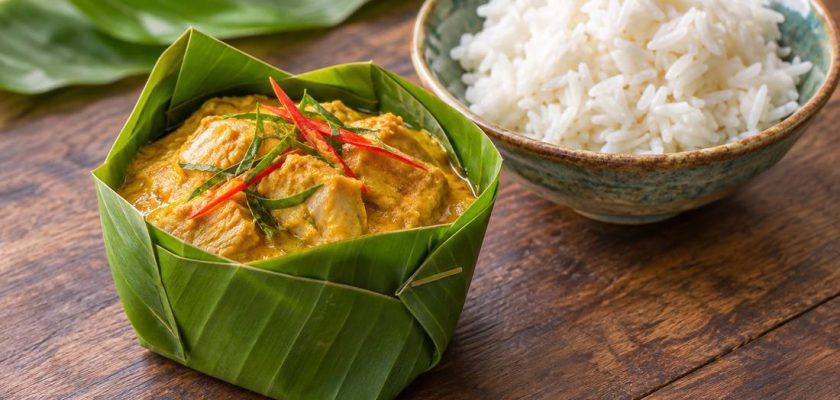
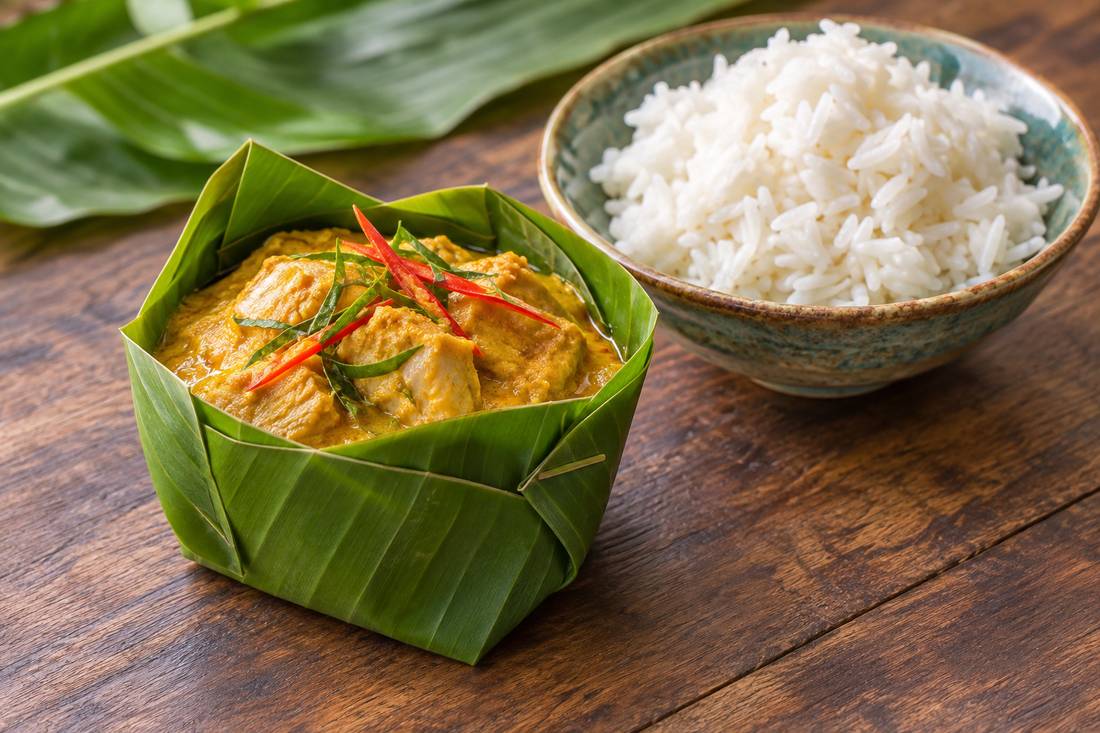
Fish amok, or amok trey, is often called Cambodia’s national dish. Pieces of freshwater fish such as snakehead or catfish are mixed with kroeung, coconut cream and egg, set in a banana-leaf cup lined with noni leaves and steamed for 20 to 30 minutes until it sets like a soft mousse. It is eaten with steamed rice. Many restaurants also offer chicken or tofu versions. A properly steamed amok holds its shape; a loose, soupy one is a shortcut.

Beef lok lak

Lok lak is cubed beef, marinated and seared quickly in a wok, served on lettuce, tomato and onion, often with rice and a fried egg. The essential part is the dip: lime juice mixed with salt and black pepper, ideally Kampot pepper. A similar dish in Vietnam is called bò lúc lắc, or shaking beef.

A small cup folded from banana leaf holding a golden steamed curry, beside a bowl of white rice on a wooden table
Fish amok is steamed in a banana-leaf cup. Illustration.

Kampot pepper

Cambodia’s best-known ingredient comes from the southern provinces of Kampot and Kep. It was registered as Cambodia’s first geographical indication on 2 April 2010 and, according to AP, became the first Cambodian product to gain the EU’s Protected Geographical Indication in February 2016. The EU specification published in EUR-Lex covers green, black, red and white pepper and describes a strong but not burning heat that builds slowly.

Breakfast dishes

  • Num banhchok: lightly fermented rice noodles with a fish and kroeung broth and fresh herbs, sold by morning vendors.
  • Bai sach chrouk: thin slices of pork, marinated and grilled over charcoal, served on rice with pickled vegetables.
  • Kuy teav: rice noodle soup in a clear pork broth.

Soups and curries

Samlor is the Khmer word for soups and stews. Samlor kako, a thick soup of green kroeung, prahok, toasted ground rice and many vegetables, is also often named as a national dish. Khmer red curry, milder than Thai versions and often eaten with bread, is served at weddings and festivals.

Common questions

Is Cambodian food spicy?

Usually less so than Thai food. Heat comes from chilli served on the side and from pepper.

What should I order first?

Fish amok and beef lok lak give you the two sides of Khmer cooking: fragrant and creamy, and sharp and peppery.

How we put this together: dish descriptions follow established recipes and the official sources linked above. Checked in November 2026.